Stock manipulation: Atlas Jewellery India

http://www.moneylife.in/article/stock-manipulation-atlas-jewellery-india/40679.html

Stock manipulation: Atlas Jewellery India

9 March 2015

Moneylife

After a sharp rise of more than 1970%, the stock price of Atlas Jewellery crashed by over 50%. Sebi is sleeping as usual

Atlas Jewellery India (Atlas) took over Gee El Woollens on 31 July 2013. After the current promoters acquired the controlling interest, the company’s name was changed. The present promoters, having an established jewellery business, started buying into Gee El Woollens since 2006. Was the takeover fair? Between 2006 and 2011, the company did not make any disclosure in compliance of the takeover regulations. The market regulator fined Atlas only Rs3 lakh for not complying with the regulations. Atlas effectively started its export business operations in January 2014. From February 2013 to October 2014, the stock price of Atlas shot up by around 350%, to Rs45 from around Rs10. This was not all. In a span of two months, the price shot up another 360% and peaked to Rs207 on 8 December 2014, from Rs45 on 1 October 2014, constantly hitting the upper circuit. The trend reversed soon. Just after hitting the peak, the stock price started falling sharply, constantly being locked in the lower circuit. The price crashed by 52%, to Rs100 on 18 February 2015. The exchanges and the regulator cannot see a clear case of market manipulation.

Accounting ‘Shenanigans’ Are More Common Than Investors Think

http://www.businesswire.com/news/home/20150309005895/en/Accounting-%E2%80%98Shenanigans%E2%80%99-Common-Investors#.VQFQIfyUeCk

Accounting ‘Shenanigans’ Are More Common Than Investors Think

9 March 2015

Business Wire

Learn How to Navigate the Non-GAAP Smokescreen and Protect Client Capital

NEW YORK–(BUSINESS WIRE)–March 09, 2015–

The New York Society of Security Analysts (NYSSA) will shed light on the trickery some companies employ to mislead Wall Street and show how to spot the red flags before getting victimized with Financial Shenanigans March 12. Continue reading

Dell Named 2015 World’s Most Ethical Company After 2010 $100 Million Fine For Acounting Fraud

http://jewishbusinessnews.com/2015/03/10/dell-named-2015-worlds-most-ethical-company-nice-shift-from-2010-100-million-fine-for-fraud/

Posted by John SOH Yong Ye, Year 4 undergrad at the School of Economics, Singapore Management University

Dell Named 2015 World’s Most Ethical Company, Nice Shift From 2010 $100 Million Fine For Fraud

“Doing the right thing, and winning the right way is personal at Dell. It’s the way we do business,” said Michael McLaughlin, Dell’s chief ethics and compliance officer.

Dell announced that it has been recognized by the Ethisphere Institute, the global leader in defining and advancing the standards of ethical business practices, as a 2015 World’s Most Ethical Company. For the record, though: in July 2010 Dell Inc. agreed to pay a $100 million penalty to settle SEC charges of disclosure and accounting fraud in relation to undisclosed payments from Intel Corporation. Michael Dell and former CEO Kevin Rollins agreed to pay $4 million each, former CFO James Schneider to pay $3 million to settle the charges. Continue reading

Jho Low and the Wolf of Wall Street: how Malaysian businessman ‘hooked up DiCaprio’

Posted by Mildred LIANG Bei Yan, Year 4 undergrad at the School of Economics, Singapore Management University

http://www.scmp.com/print/business/article/1735821/jho-low-and-wolf-wall-street-how-malaysian-businessman-hooked-dicaprio

http://www.scmp.com/news/asia/south-east-asia/article/1735651/well-connected-malaysian-jho-low-living-hk-denies-fraud

Jho Low and the Wolf of Wall Street: how Malaysian businessman ‘hooked up DiCaprio’

Thursday, 12 March, 2015, 2:01pm

Business

Toh Han Shih

The movie “Wolf of Wall Street” had Leonardo DiCaprio in the starring role and high-living Malaysian businessman Low Taek Jho played a part in making it happen. Continue reading

[Flashback] Banks sue Olympus for $273m over accounting fraud

http://www.ft.com/intl/cms/s/0/bf18ab4a-bfce-11e3-b6e8-00144feabdc0.html#axzz3U9ofH6ce

Posted by LIM Hui Jie, Year 4 undergrad at the School of Economics, Singapore Management University

April 9, 2014

By Ben McLannahan in Tokyo

Olympus Corp has been hit with the biggest lawsuit stemming from its two-decade long accounting fraud, when banks joined forces to sue the company for a total of Y28bn ($273m) in damages. The civil lawsuit, filed on Monday by six trust banks, is a fresh setback for the Japanese group, which admitted in autumn 2011 that it had concealed losses dating back to the early 1990s by overpaying for acquisitions. Michael Woodford, the company’s British chief executive, turned whistleblower after being sacked for attempting to probe the cover-up. Continue reading

Seven resignations, two sackings and two suspensions on board of troubled Birmingham International; In January, Birmingham announced that HK$38 million was suspected to have been misappropriated by an unnamed former employee and Hong Kong police were investigating the matter

http://www.scmp.com/print/business/companies/article/1734042/seven-resignations-two-sackings-and-two-suspensions-board

Seven resignations, two sackings and two suspensions on board of troubled Birmingham International

Tuesday, 10 March, 2015, 9:20am

Toh Han Shihhanshih.toh@scmp.com

carson_david_wong

Carson Yeung was jailed for six years in March last year.

Seven directors of Birmingham International Holdings, including the chairman and chief executive, resigned on Monday, two directors were sacked and two directors were suspended, the Hong Kong-listed firm announced on Tuesday. The massive shake-up came a day after it was reported that imprisoned money launderer Carson Yeung Ka-sing had called an extraordinary general meeting of Birmingham International, which owns English soccer team Birmingham City. The receivers are conducting an investigation into the affairs of the company Continue reading

Independent Directors’ Dissent on Boards: Evidence from Listed Companies in China

Posted by Eugene SAY Gui Hua, Year 4 undergrad at the School of Business, Singapore Management University

Eugene: As we ask ourselves this week whether whistleblowing works in Asia, research has found that even at a supervisory board level (equivalent to Board of Directors) in China, directors are not as ‘independent’ as they are deemed to be.  The research has found that directors are more likely to dissent when the board chair (most commonly, the dual-role CEO and Chairman of the company) has left the board. There is a 27% occurrence of dissent among departing directors who are due to leave the board in their last 60-days. Also, while directors with foreign experience are more likely to dissent, it is inconclusive that academics, accountants and lawyers are significantly more active in voicing dissent. Even in a situation of dissent, findings show that they dissenting directors tend to offer mild, subjective justifications and overt criticism of the management is rare. Lastly, while current literature suggests that dissent might be reflective of diverse viewpoints, which is beneficial to the firm, it has been found that  dissent is consequential to both the director and the firm.  For directors, dissent significantly increases one’s likelihood of exiting the director labor market, translating to a more-than-10% estimated loss of annual income. For firms, there is an economically and statistically significant cumulative abnormal return of -0.97% around announcement of dissent.

http://papers.ssrn.com/sol3/papers.cfm?abstract_id=2252200&download=yes

Independent Directors’ Dissent on Boards: Evidence from Listed Companies in China

Juan Ma, Harvard Business School

Tarun Khanna, Harvard University – Strategy Unit

October 24, 2013

Harvard Business School Strategy Unit Working Paper No. 13-089

Abstract:

In this paper, we examine the circumstances under which so-called “independent” directors voice their independent views on public boards in a sample of Chinese firms. First, we ask why independent directors dissent, i.e. how they justify such dissent to public investors. We find that when independent directors dissent, they tend to offer mild, subjective justifications. Overt criticism of the management is rare. Next, we ask when an independent director is more likely to dissent and who is more likely to dissent. Controlling for firm and board characteristics, we find that dissent is significantly correlated with breakdown of social ties between the independent director and the board chair who locates at the center of the board bureaucracy in China. Dissent is more likely to occur when the board chair who appointed the independent director has left the board. Dissent also tends to occur at the end of board “games”, defined as a 60-day window prior to departure of the board chair or departure of the independent director herself. The endgame effect is particularly strong, seeing 27% of the dissent issued at board “endgames” which represents only 4% of independent directors’ average tenure. While directors with foreign experience are more likely to dissent, we do not find that academics, accountants and lawyers are significantly more active in voicing dissent. Lastly, we show that dissent is consequential to both the director and the firm. For directors, dissent significantly increases one’s likelihood of exiting the director labor market, which translates to a more-than-10% estimated loss of annual income. For firms, we document an economically and statistically significant cumulative abnormal return of -0.97% around announcement of dissent. Although the literature has suggested that dissent might be reflective of diverse viewpoints, and perhaps beneficial in and of itself through reduction of firm variability, we do not find this offsetting beneficial effect to be strong.

Noble’s Spat With Iceberg Highlights Barriers to Disclosure

http://www.wsj.com/articles/nobles-spat-with-iceberg-highlights-barriers-to-disclosure-1425932989

Posted by John SOH Yong Ye, Year 4 undergrad at the School of Economics, Singapore Management University

Noble’s Spat With Iceberg Highlights Barriers to Disclosure

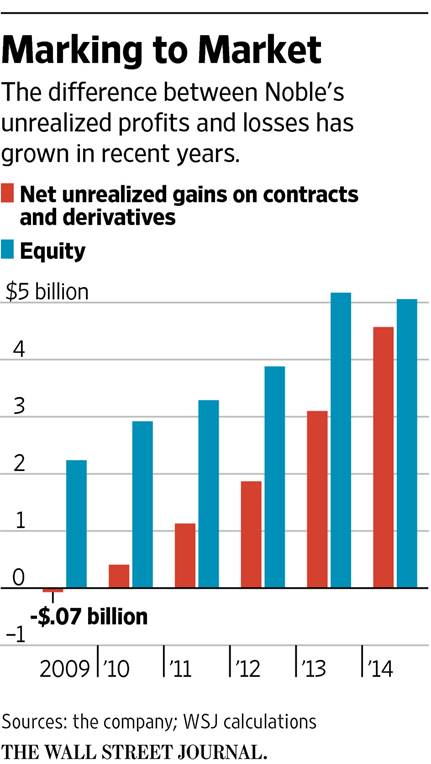
Commodity traders become more open, but there are limits

Noble Group is a middleman in commodities markets. PHOTO: REUTERS

ANDREW PEAPLE

March 9, 2015 4:29 p.m. ET

Noble

HONG KONG—Once renowned for their secretive nature, companies that make billions of dollars shifting commodities around the world have been slowly emerging into the limelight in recent years. But a high-profile scrap between Hong Kong-based Noble Group Ltd. and Iceberg Research, a little-known research firm, has pointed up a persistent problem: It can be hard to tell how trading companies make their money. Continue reading

[Flashback] Accounting Fraud in Vietnam: Eyes turn to auditors after Bach Tuyet Cotton Corporation (BBT) accounting scandal; Vietnam Arrests Four More Former Vinashin Officials

http://vietnamnews.vn/economy/business-beat/179237/eyes-turn-to-auditors-after-bbt-scandal.html

http://www.bloomberg.com/news/articles/2010-09-06/vietnam-police-arrest-4-more-former-vinashin-officials-amid-investigation

Posted by LE Hoang Trinh, Year 4 undergrad at the School of Information Systems, Singapore Management University

Eyes turn to auditors after BBT scandal

(08-08-2008)

by Nguyen Duy

Never before in Viet Nam has the accuracy of a company’s audited financial reports raised so much concern, and never before has the quality of auditing companies come under such heavy fire. The problem has grown so critical that the ministries of Finance and Public Security are drafting a circular to improve the circulation of information about listed company and auditor violations, according to director of the State Securities Commission (SSC)’s Investigation Department Hoang Duc Long.

Problems began with Bach Tuyet Cotton Corporation (BBT), a HCM City Stock Exchange listed company, when in mid-July, the exchange temporarily suspended transactions for BBT shares due to heavy losses in 2006 and 2007. The news came as a shock to investors, who had heard nothing but good reports about BBT. Continue reading